
Plenty of inspection reports recommend replacement. Almost none of them contain the measurements that would justify it.
What a report contains is a condition state. A rating, element by element, describing what the inspector could see and reach on the day. A recommendation sitting on top of that is a judgement, not a calculation. The decision to demolish a structure and build a new one gets made later, by different people, in a different room, using assumptions that were never written down. Somewhere between the rating and the budget line, an observation turns into a conclusion, and the conclusion tends to arrive with more confidence than the evidence supports.
That gap is worth money. Across Australia there are an estimated 10,000 timber bridges, with about 30 percent assessed as being in poor condition in 2018. In New South Wales alone there are around 1,800 council-owned timber bridges. The state’s Fixing Country Bridges program has committed $500 million to the problem across 58 councils, with $458 million already allocated to 495 projects. That works out to roughly $925,000 per structure.
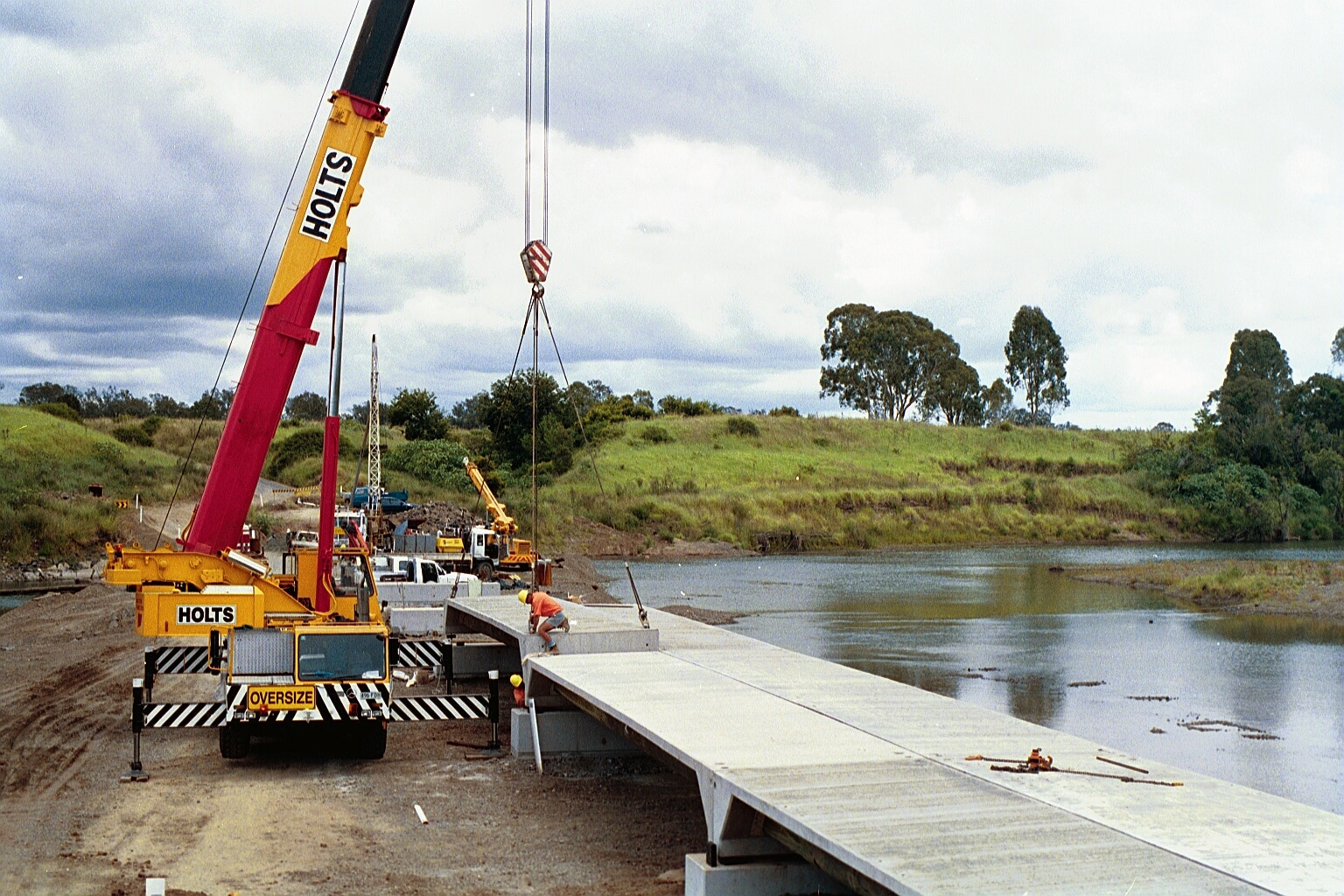
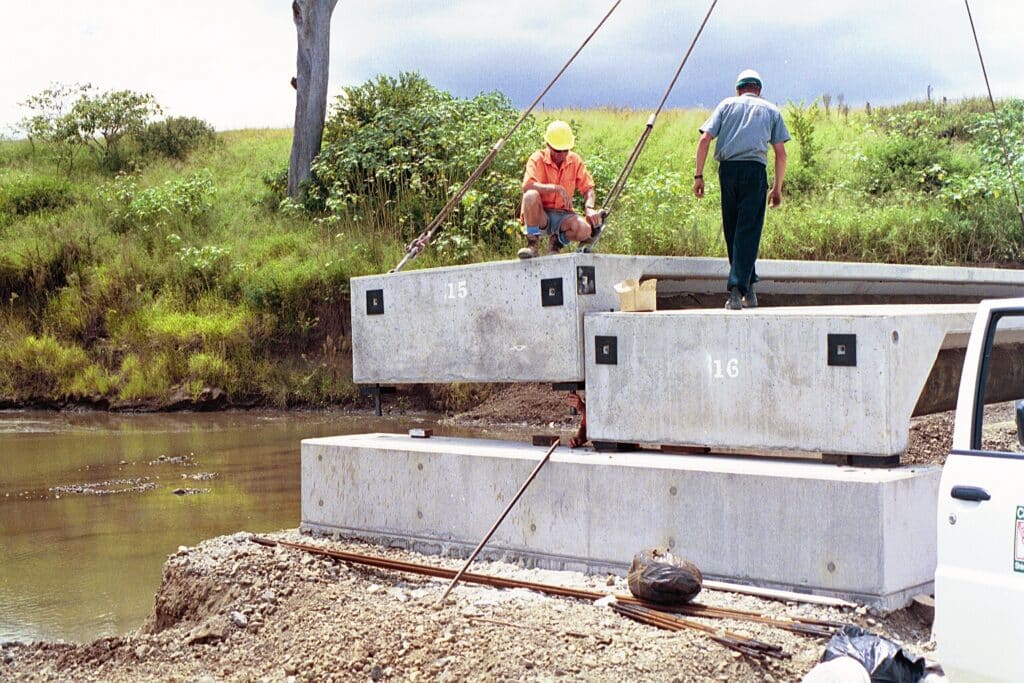
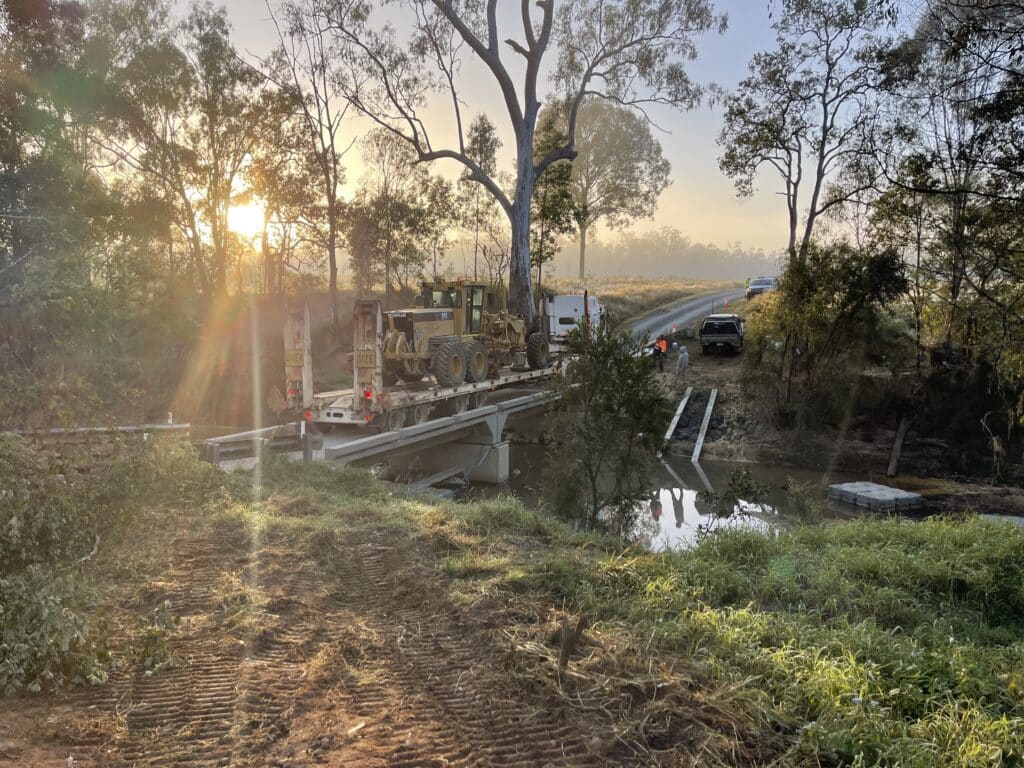
Set that against a rehabilitation program. Somerset Regional Council was carrying 21 Doolan Deck structures with failing decks and girders pulling away from them. Rather than replace the network, the council had it repaired across two rounds of work. Seventeen came in inside six weeks without the roads ever closing, for a combined figure below $1.5 million. That is under $90,000 a structure, each one handed back with its condition rating recovered and six decades added to how long it will stand. The full account of that job is on this site.
Those two figures are not describing the same piece of work, and nobody should pretend otherwise. But an order of magnitude is a large thing to leave unexamined.
What a condition rating actually tells you
A condition state rating is a description of observed defects. It is not a structural capacity calculation, and it does not claim to be one.
An inspector records what is visible and reachable. On a timber bridge, the elements that matter most are frequently neither. Girder ends sit inside abutments. The top surface of a log girder sits under a deck. Piles disappear into soil and water. A structure can be rated at its worst condition state because of what the inspector could see, while the majority of its timber volume is sound and doing exactly what it was designed to do.
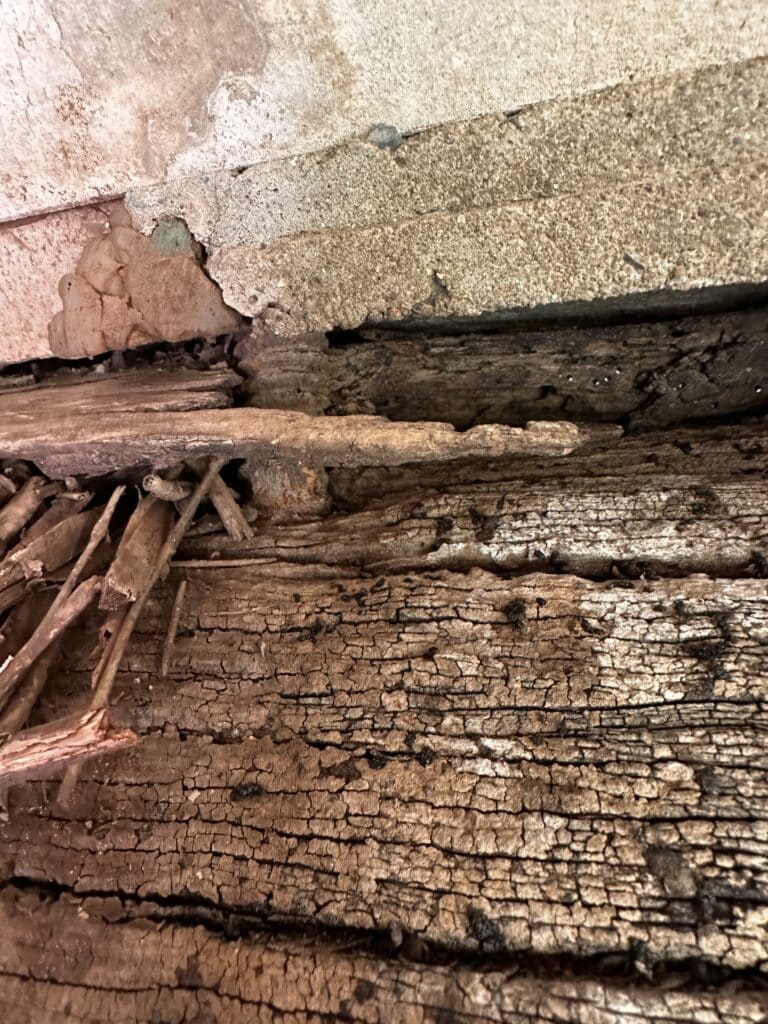
The inverse happens too, which is the part that should worry asset owners more. A structure can look acceptable and be failing where nobody is looking. Concrete encasement of girder ends is a good example: the concrete keeps the element out of sight, traps moisture in the end grain, and produces decay that a visual inspection cannot find and a condition rating will not capture.
Either way, the rating is the beginning of the question, not the answer.
Decay is almost always local
The assumption underneath most replacement decisions is that deterioration is general. The structure is old, timber decays, therefore the whole thing is going.
Timber does not work that way. Fungal decay needs moisture content above about 24 percent to sustain itself, and it needs oxygen. Those two conditions coincide in specific, predictable places: the splash zone, the deck to girder interface, the end grain at a bearing, anywhere detailing traps water against wood and stops air moving. Below the waterline and below ground, where there is no oxygen, timber does not decay at all. Piles that have been in the mud for a century routinely come out sound.
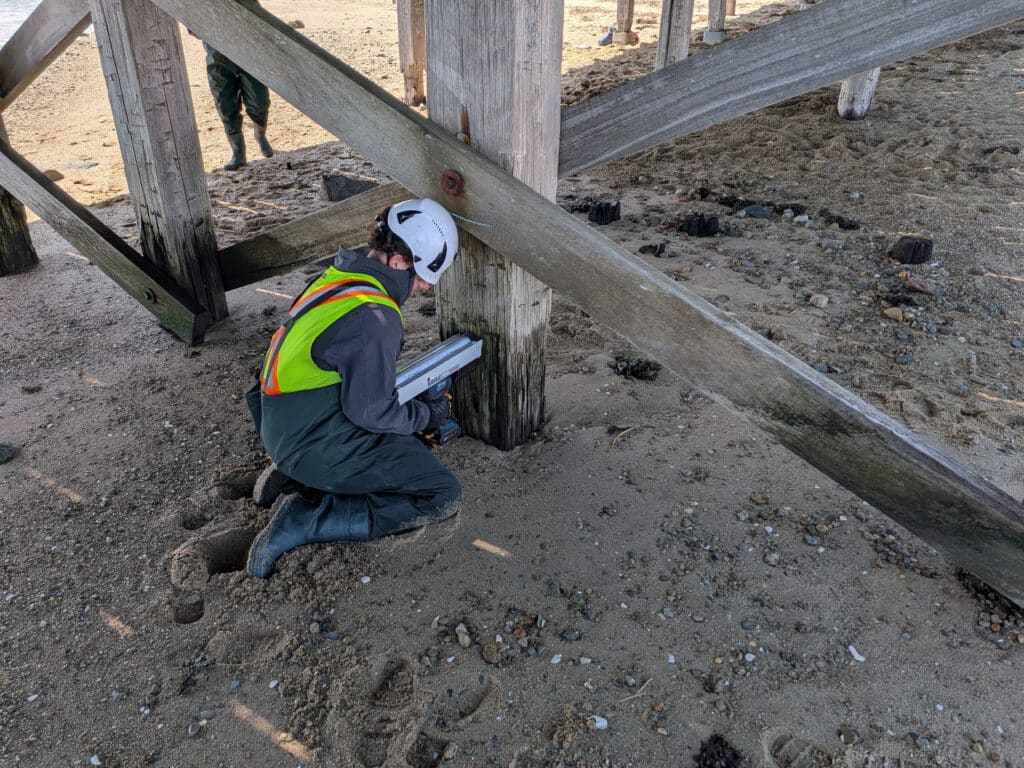
So the damage on a deteriorated timber structure is usually concentrated in a narrow band, with a great deal of intact material above and below it. Establishing where that band sits, and how much section it has actually taken, is a testing exercise. Non-destructive methods answer it without dismantling anything: compression wave time of flight through a member to map internal condition, resistance drilling as a cross-check, moisture content readings to show whether the mechanism is still active.
Once the decay is located rather than assumed, the repair can be local too. That is the whole argument. You do not replace a bridge because 8 percent of its timber volume has failed.
What the replacement business case leaves out
Replacement costs get compared against rehabilitation costs as though both numbers are complete. They rarely are.
Closure time is a cost borne by somebody. Rehabilitation frequently happens under traffic or under short partial closures. Replacement means demolition, foundation work, and a structure that does not exist for months. On the Mid North Coast, residents cut off by a bridge closure have had hours added to a school run while they wait for a replacement that is still months away. That cost is real, it lands on the community rather than the capital budget, and it does not appear in the comparison.
Mobilisation does not scale the way people expect. Somerset’s 17 bridges were done as one program. Getting a crew, plant and materials to a rural site is a fixed cost whether you are there for two days or two months, and rehabilitating a network of structures in a single mobilisation spreads that cost in a way that replacing them one at a time never can.
Demolition and disposal are a line item. Removing an existing structure costs money, and the material goes somewhere.
The 60 year maintenance line is usually missing from both columns. A 2006 study of more than 50 modern timber bridges in Germany found annual maintenance running between 0.1 and 2.5 percent of initial construction cost, and concluded that timber bridge service life and maintenance costs are comparable to steel and concrete. The common assumption that timber is cheap to build and expensive to keep is not supported by the measurements.
Embodied carbon is now a reportable number for many councils. Replacing a functioning timber structure with concrete converts a carbon store into a carbon cost. Where councils have emissions commitments, that belongs in the business case rather than in a separate sustainability report nobody reads alongside it.
When replacement is the right answer
Sometimes it is, and a firm that will not say so is not worth listening to.
If a structure cannot be brought to the load rating the road now requires, replace it. Many old timber bridges were designed for loads that no longer reflect what uses them, and there is a limit to what reinforcement can add. If the geometry is wrong, a single lane where two are needed, a deck below the flood level that keeps closing the road, no amount of restoration fixes that. If the foundations have moved, the problem is not the superstructure. And if testing shows section loss through the load-carrying elements rather than in a band, the arithmetic stops working.
The point is not that restoration always wins. It is that the comparison should be run on measurements.
Three questions before signing off a replacement
What percentage of the timber volume is actually unsound, and how was that established? If the answer describes appearance rather than testing, the number does not exist yet.
Where is the decay, and is the mechanism still active? Localised decay with the moisture source addressed is a different asset from general deterioration that is still progressing. Borate diffuser rods such as Decaystop® diffuser rods will arrest fungal activity in situ, which changes what the structure is worth repairing.
What does the rehabilitation option cost, from someone who does the work? Replacement costs get priced properly because there is a well-developed supply chain for pricing them. Rehabilitation frequently gets estimated by someone who has never delivered one, and contractors unfamiliar with timber consistently bid higher on timber work than contractors who specialise in it. An estimate is not a quote.
A structure that has stood for eighty years has already demonstrated something about its material. Before that gets written off, it is worth finding out what is actually left.
References
Transport for NSW. Fixing Country Bridges Program. transport.nsw.gov.au
Wood Central. NSW Replaces Timber Bridges with Concrete, At What Cost? July 2025. woodcentral.com.au
Gerold, M. (2006). Economic Efficiency of Modern Timber Bridges: Life Expectancy and Costs of Maintenance. Structural Engineering International, 16(3).
Moses, D. et al. (2017). Ontario Wood Bridge Reference Guide. Ontario Wood WORKS.
Standards Australia. AS 5100.9:2017, Bridge Design, Part 9: Timber.
