
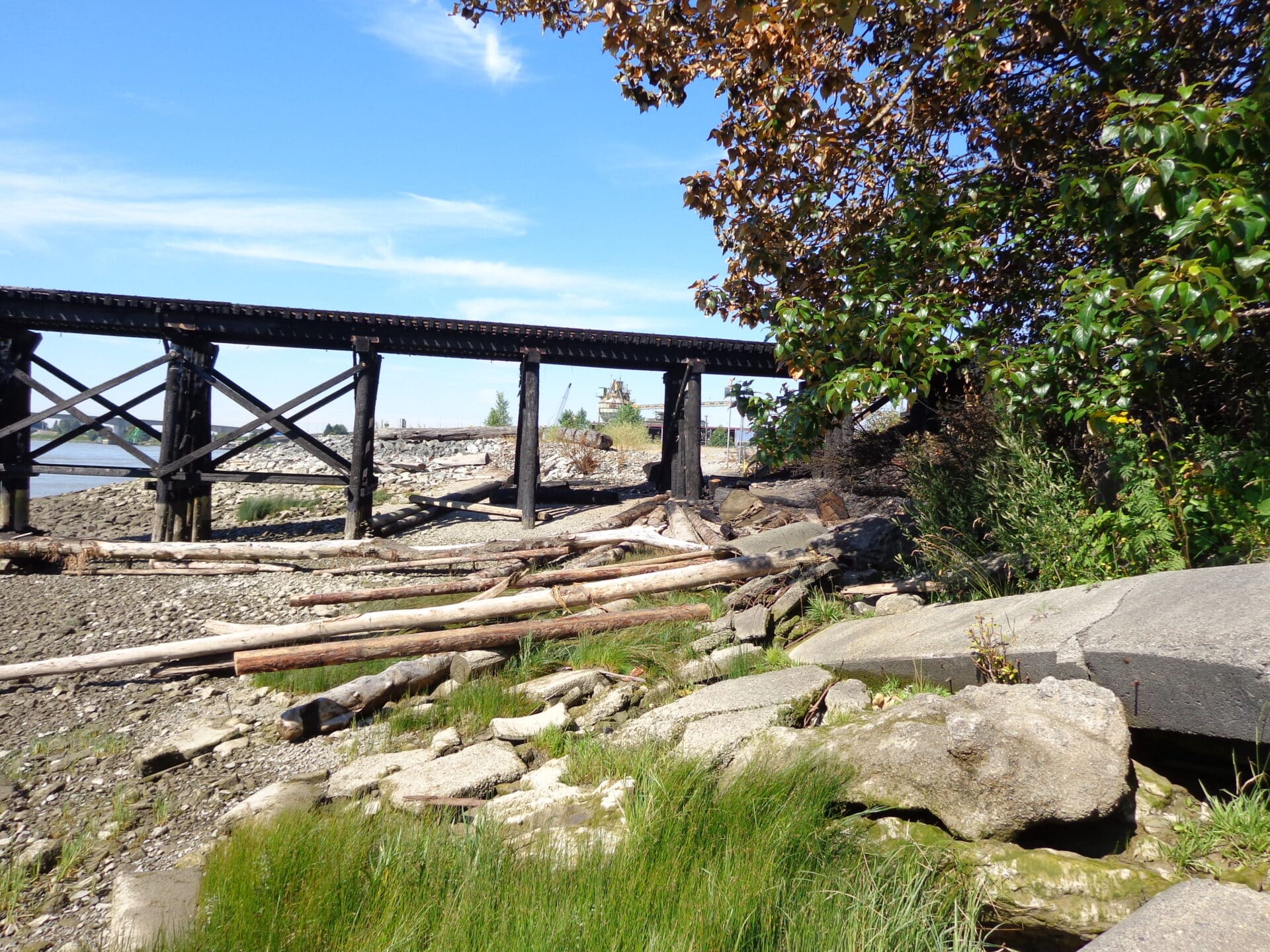
A fire damage assessment ends with a number. How much sound section is left, where the loss sits, and whether the member still carries what it was designed to carry.
That number decides everything that happens next. What it does not tell you is what the repair looks like, and the answer surprises most asset owners, because it usually involves taking away far less than they expect.
The char can stay
The instinct after a fire is to strip every surface back to clean timber. On a member that is still sound, that is unnecessary, and it is not an improvement.
Char has no structural capacity. But it does have a function. The layer that formed during the fire is a poor conductor of heat, which is exactly why the burn slowed down in the first place. Left in place on a member that still has the capacity it needs, it carries on doing that job and insulates the sound timber behind it against a future fire.
So the first question is not how to get the char off. It is whether the member underneath still works. If it does, the char stays, and it is doing something useful.
Char comes off when something has to bond to the wood underneath. A member that needs fibre reinforcement needs a sound, clean surface for the laminate to grip, so the char gets scraped or cut back until it reaches good timber. That is a preparation step, not a cleaning step, and it only happens where reinforcement is going.
There is a third option worth knowing about, because it changes what is possible on heritage and exposed-timber work. Charred members can be walnut shell blasted back to bright. It is gentle enough to leave the sound timber intact, and from there the member can be repaired, reinforced, or stained to match the rest of the structure. Where the timber is the architecture rather than hidden behind a ceiling, that matters.
Reinforce, or replace
Two things decide it, and neither of them is sentiment.
The first is structural. Remaining capacity measured against the demand on that member. The assessment establishes it, and it sets the outer boundary of what reinforcement can achieve. Past a certain amount of section loss, no amount of added fibre makes the arithmetic work.
The second is economics. Where both options are structurally adequate, the cost of each repair method gets compared against the cost of replacing the member outright. Sometimes a new member is genuinely the cheaper answer, and when it is, that is the recommendation.
What the repair looks like
It depends on which part of the structure took the damage.
Piles. Posting rebuilds the section where loss is severe, restoring full capacity. A Dutchman repair cuts out the damaged outer material and replaces it while keeping the sound core, which leaves the pile looking original. Wraps are used where confinement is the right answer for the condition.
Superstructure. A member can be replaced in kind. It can be sistered, with a new member installed alongside the original to share the load. Or it can be reinforced with high-strength fibre: shear panels, Retroten® laminate, or wraps, depending on what the member has to do and where it has lost section.
Reinforcement is usually the smaller intervention. It restores capacity without removing the original member, which keeps the structure’s existing fabric and shortens the time the asset spends out of service.
Where the work happens
Two places, for two different reasons.
Replacement timber is machined in Jefferson, Oregon. Every new member is cut and prepared in the shop before it ships, so it arrives ready to install rather than being fitted and adjusted on site. That is less time on the structure and a better-controlled result.
Reinforcement happens in the field. Fibre systems are applied to the member in place. The structure does not come apart to receive them, and in many cases it does not come out of service at all.
It starts with the inspection
None of this gets decided from a photograph, or from how a structure looks after the fire crew leaves.
TRS works alongside Wood Research and Development to inspect the structure and establish its real condition first. WRD’s testing produces the capacity numbers. TRS selects the repair method those numbers will support, and carries it out.
That sequence is not a formality. Every decision downstream depends on it: reinforce or replace, strip the char or leave it, shop or field. Get the measurement wrong and every choice after it is a guess.
If you have a timber structure that has been through a fire, find out how much of it is still sound before anyone prices a demolition. In most cases there is more left than the blackened surface suggests.
